
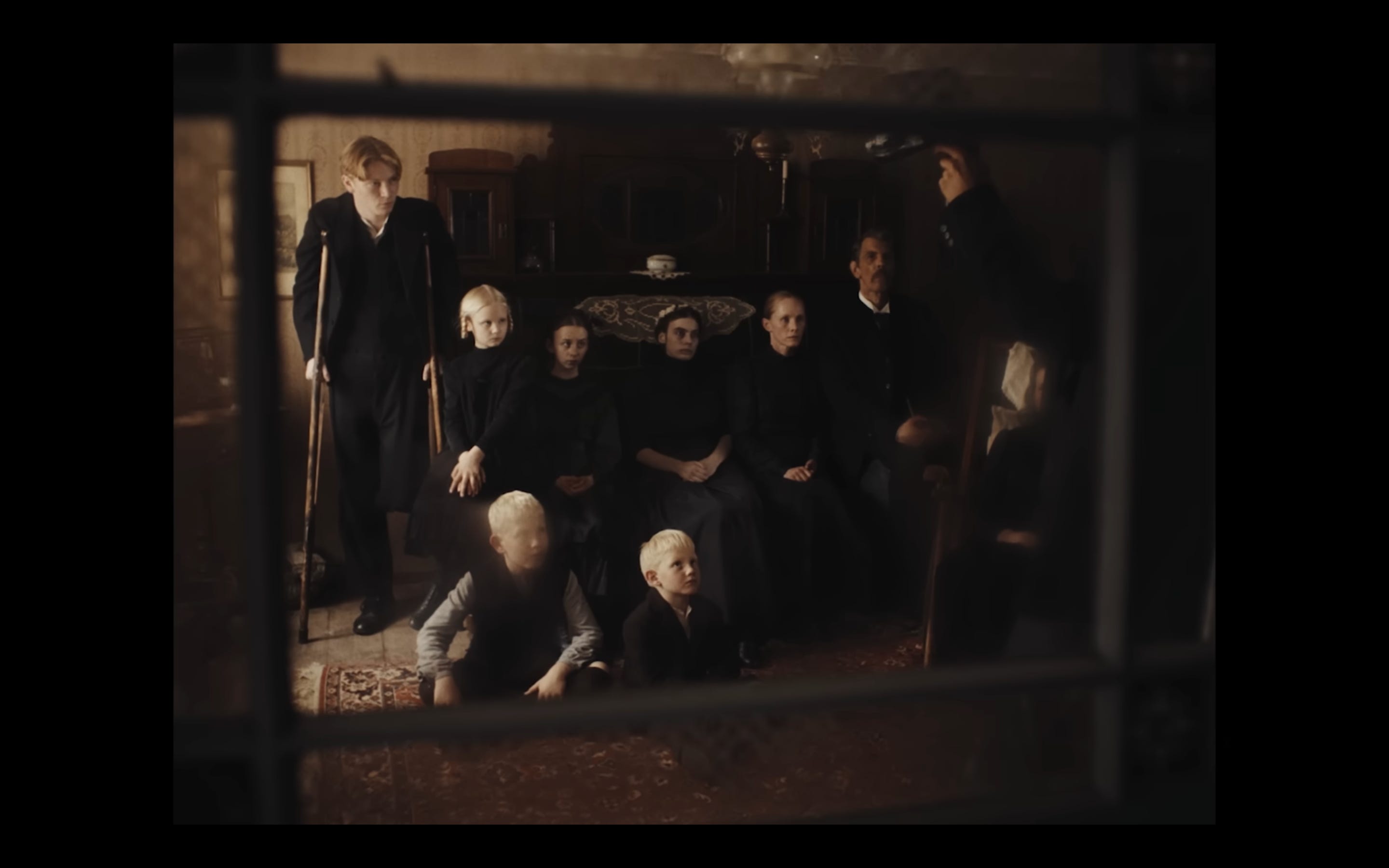
With Sound of Falling, director Mascha Schilinski proposes a sensory journey that unfolds as a singular cinematic experience. Its discourse is built through audiovisual language: a hypnotic mise-en-scène places time and memory at the center of the story, exploring the traumas, secrets, and wounds of several characters across different generations, whose lives intertwine in a very particular way. The film is both a subtle poem and a devastating tragedy: its images captivate and devastate in equal measure.
Louise Peter and Mascha Schilinski’s screenplay weaves together the stories of four women from different generations who live on the same farm in northern Germany across four historical periods: 1910, 1940, 1980, and the present day. Through memories, family secrets, and experiences of violence and repression, the film constructs a fragmented portrait of memory and of traumas that seem to persist over time, turning a house into the silent witness to a century of stories.
Few films use voice-over as precisely as Sound of Falling. The characters’ reflections don’t repeat what the images already tell us; instead, they fill gaps and expand the narrative. Just as every space in the house becomes a character, each reflection becomes something almost tangible, interacting with the characters and helping us piece together fragments of time that arrive in no apparent order. The shifts between timelines are jarring, but the transitions are seamless thanks to highly precise editing.
Fabian Gamper’s cinematography brings us closer to each character’s anguish. His images capture the passage of time and allow us to savor the memories that accumulate in every corner of the old house. The 4:3 aspect ratio reduces the horizontal space, creating an almost square frame filled with close-ups that draw us into the characters’ psyches. Shadows, subdued light, and spaces bathed in natural light create unforgettable, almost painterly frames. The soundtrack is another major narrative element: the sounds build an atmosphere of their own within the film’s universe. Schilinski also draws on elements of Gothic horror: oppressive spaces, invisible presences, uncomfortable silences, and a constant sense of threat. The house functions almost like a supernatural entity, although the ghosts that inhabit it are, above all, those of historical memory.
Sound of Falling is not an easy film, but it does not intend to be. It demands attention and patience, and in return offers an experience that stays with you long after the credits roll. Schilinski turns memory into sensory material and allows time, the house, and its ghosts to speak for themselves. It is a work that is felt more than explained, and one that confirms cinema’s power to make visible what normally remains hidden.


Leave a Reply