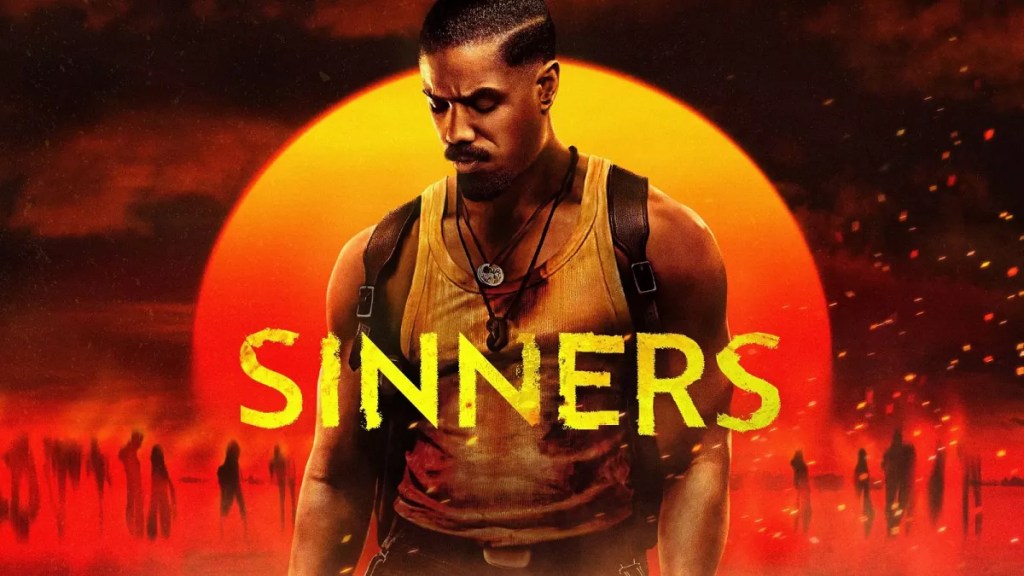
As an art form, cinema has at its core the vocation to entertain the audience. Sinners (2025), by Ryan Coogler, fully embraces both audiovisual artistry and cinematic spectacle. The director and screenwriter crafts a work that invites critical analysis from multiple angles while delighting the audience on a journey reminiscent of those bygone summer blockbusters. Here, substance and style merge to create a genre film that plays with clichés and conventions to uncover its unique essence.
Twin brothers Smoke and Stack (Michael B. Jordan in a dual performance) return to Clarksdale, their hometown nestled in the Mississippi Delta. It’s 1932, a time marked by financial depression, racial segregation, and alcohol prohibition. But Smoke and Stack have a plan for prosperity—a secret nightclub. With the help of old acquaintances, they aim to give the small town an escape while also lining their pockets. However, a supernatural force shatters those dreams in a flash, and Smoke, Stack, and their crew soon find themselves fighting for their lives.
The Devil’s Blues
Just as the blues, which accompanies the vivid images of Sinners, evolved from a variety of influences such as African culture, ragtime, and spirituals chants, so too does Ryan Coogler’s film. It’s a fusion of cinematic genres. The screenplay is structured like a classic horror story. Yet it draws from many sources. On one side, we have a period drama tackling social and political themes; on another, there are sequences with musical numbers; and at its core, it’s a vampire movie—with heart-staking, garlic, holy water, and fangs seeking throbbing necks for blood.
Michael B. Jordan showcases his remarkable talent in a dual role as the twins Smoke and Stack. It’s no surprise that he can carry the film with his charisma and screen presence. But the rest of the cast also shines—from newcomer Miles Caton as young Sammie to Jack O’Connell as the leader of the evil vampires, and veteran Delroy Lindo (Delta Slim), who serves as comic relief with brilliantly delivered lines.
Sinners reaches its peak in its visual presentation. The music by Ludwig Göransson (Tenet, Black Panther: Wakanda Forever) becomes a character, and his score empowers the frames captured by Autumn Durald Arkapaw’s camera with a special strength. Shot on 65mm film, the movie captures the grandeur of the landscapes with a unique texture. This format allows Coogler to experiment with different aspect ratios on screen, especially in the IMAX-shot sequences where the images fully engulf the screen.
Sinners isn’t a perfect film, but its structure works very well and delivers what a movie of its kind should: entertainment. From the flawless introduction of Smoke and Stack to young Sammie’s debut with his supernatural blues, which may be the film’s most accomplished sequence, all the way to the violent and cathartic finale. The film finds its own voice within the formulas of genre cinema. Its grandeur pulls us in and takes our breath away, and its impact transcends the audiovisual experience.
 The Last Movie Guy