“When the intention is not upright, one seeks side doors and paths to the left.”
(Chinese Proverb)
To understand Left-Handed Girl (2025), it is necessary to delve into certain aspects of Chinese culture. In Chinese tradition, strongly influenced by Confucianism, left-handedness was seen as a deviation from order and social harmony. The “right” represented what was correct, noble, and appropriate, while the “left” carried a negative connotation. Therefore, writing, eating, or greeting with the left hand was considered improper and was often corrected from childhood. Director Shih-Ching Tsou draws on this old tradition and her own experiences to structure her story.
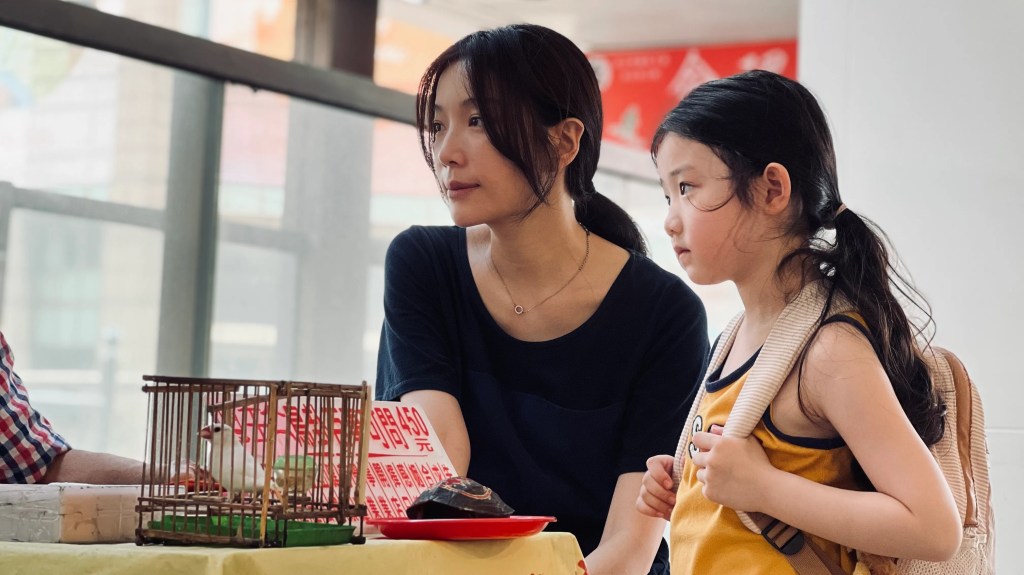
At the heart of Left-Handed Girl is I-Jing (Nina Ye), a curious five-year-old who has just moved to Taipei with her mother Shu-fen (Jansel Tsai) and her sister I-Ann (Shih-Yuan Ma). The new city promises a second chance for the single mother and her two daughters. A food stall in the bustling Taipei night market becomes their only hope for a better future. Seen mostly through the eyes of the innocent I-Jing, we witness the life of her mother, who battles poverty and depression. We also meet her sister, a teenager trying to leave the nest. From the very first sequence, with the little girl looking through a kaleidoscope as colors blend with the new city that welcomes her, we understand that we are seeing the world through her perspective.
A Left-Handed Girl
The narrative tone, the staging, the use of the camera—all bring us closer to an intimate story. Left-Handed Girl almost feels like a documentary. With her fictional tale, director Shih-Ching Tsou captures snapshots of real life. The tears, the laughter, the problems, the solutions… all feel close, and the audience has no choice but to empathize. Through I-Jing’s innocent eyes, we witness a heartbreaking drama that transcends the family struggles faced by the protagonists. The director tackles complex aspects of Chinese culture, from outdated traditions to the role of women in a society that systematically marginalizes and stigmatizes them.
Left-Handed Girl has the prodigious ability to lift our spirits and, at the same time, take our breath away. Its changes of pace and narrative twists are executed with precision, culminating in the unforgettable birthday party sequence, where an unexpected revelation completely transforms the story. With both firmness and delicacy, Shih-Ching Tsou delivers a film that transcends family drama to speak of fragility, innocence, and resilience. From the everyday, the director reveals the traumas inherited from one generation to the next—those silent wounds that never fully heal.
 The Last Movie Guy