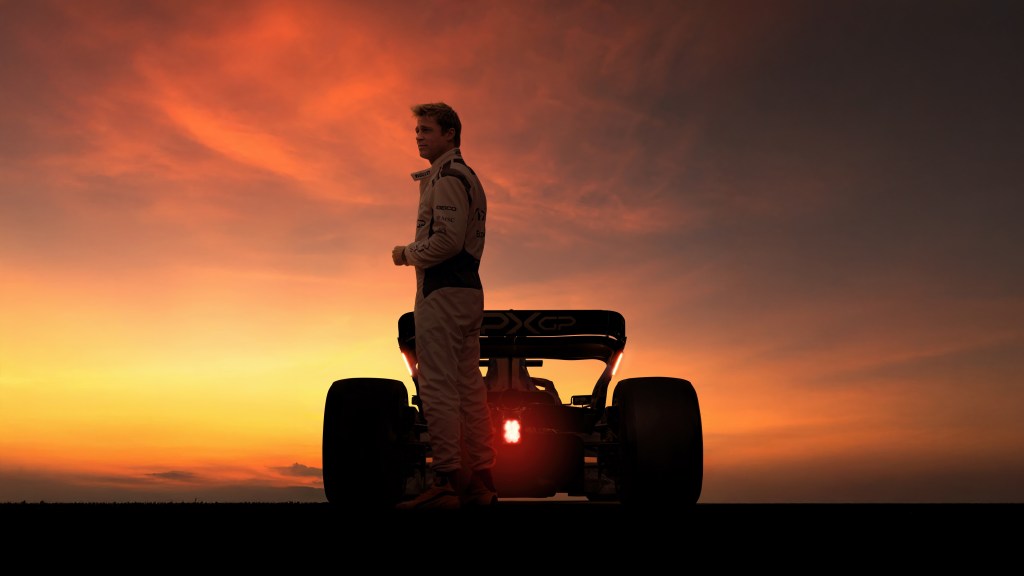
Cinema’s love affair with car racing is nothing new. While F1 (2025) has ignited the passion of motorsport fans with its stunning action sequences and immersive portrayal of the Formula 1 world, we can look much further back and see that this type of story has long had a place on the big screen. In 1932, the ever-bold Howard Hawks turned James Cagney into a famed race car driver in The Crowd Roars. True to his style, Hawks captured one of the earliest sound films to depict racing with a raw sense of realism, even using actual racetracks for the action scenes.
Much has changed since those films of the 1930s, especially on the technical front. The sense of danger, the adrenaline, and the intensity of racing sequences are now magnified through advanced cameras, updated staging techniques, and modern editing methods combined with digital effects. What left audiences breathless in the ’30s is the same thing that captivates viewers today. The difference lies in the technical craftsmanship, always shaped by the tools of the era.
High Speed, Adrenaline, and Redemption
In F1, Joseph Kosinski treads familiar ground with a story that is easy to access, leaning on narrative formulas that cinema has explored time and again. Sonny Hayes (Brad Pitt) was once a Formula 1 prodigy, but his glory days are behind him. Now a drifting veteran, he moves from one opportunity to the next with no clear direction. The past catches up with him in the form of Ruben Cervantes (Javier Bardem), an old friend offering him one last shot at returning to the top of the sport and perhaps to find a sense of redemption.
On a technical level, Kosinski achieves with F1 what he previously accomplished in Top Gun: Maverick (2022). Fighter jets are traded for race cars, but the principle remains: a sensory spectacle built on movement, rhythm, and precision. From the majestic opening sequence where we meet Sonny Hayes and his pre-race ritual set to Led Zeppelin’s Whole Lotta Love, the film makes its intentions clear. This is a movie that aims to win audiences through character charisma and visceral action, not through its plot. The real stars here are the behind-the-scenes technical crew responsible for the visual compositions and razor-sharp editing.
F1’s greatest strength occasionally turns into its biggest weakness. The soundtrack, which accompanies each race, can be overwhelming at times and doesn’t always make full use of Hans Zimmer’s composition. There are a few moments where silence and Zimmer’s carefully placed notes add real emotional weight—particularly in the climax of the final race—but those moments are rare.
Unlike other cinematic explorations of Formula 1, such as Grand Prix (1966) or Rush (2013), which dove deeper into character development and emotional complexity, F1 opts for a simpler formula. The film rests squarely on the enduring charisma of Brad Pitt, who once again commands the screen with ease. Damson Idris, his young co-star, is solid in his role but inevitably falls into Pitt’s shadow. Along the way, the film embraces many of the genre’s usual clichés—some more successfully than others—but manages to hold together. Its greatest asset is its technical display, which is both immaculate and dynamic, ensuring a visually powerful experience. And when it comes to pure entertainment, the film delivers.
F1 doesn’t aim to reinvent the genre. Instead, it offers a visually thrilling ride led by a star who still knows how to shine. It’s a movie spectacle made with craftsmanship one that delivers on its promise: emotion, speed, and high-octane entertainment.
 The Last Movie Guy